George Spencer-Brown
[ zurück ]
[ Stichworte ]
[ Die Hyper-Bibliothek ]
[ Systemtheorie ]
[ Meine Bücher ]
[ ]
Interpretation
To arrive at the simplest truth, as Newton knew and practiced, requires years of contemplation. Not activity. Not reasoning. Not calculating. Not busy behavior of any kind. Not reading. Not talking. Not making an effort. Not thinking. Simply bearing in mind what it is one needs to know. And yet those with the courage to tread this path to real discovery are not only offered practically no guidance on how to do so, they are actively discouraged and have to set about it in secret, pretending meanwhile to be diligently engaged in the frantic diversions and to conform with the deadening personal opinions which are being continually thrust upon them. G. Spencer Brown, Laws of Form (1969)
Ich interpretiere den Indikationskalkül "Laws of Form" als Beobachter-Kalkül
R. Todesco: Beobachter-Kalkül (Vortrag im Autopoietischen Kreis, 10.5.06)
G. Bateson beruft sich für sein Unterscheidungspostulat auf G. Spencer-Brown (wo?)
hier werden die LoF zum Rätsellösen verwendet. :-)
www.freie-ressourcen.de/lof/
Loui Kaufmann:
http://homepages.math.uic.edu/~kauffman/Arithmetic.htm
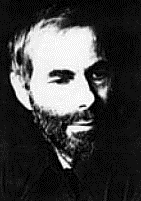
Zur Person
|
![bild]()
|
George Spencer-Brown (Pseudonyme James Keys, Richard Leroy, 1923) ist ein britischer Mathematiker.
"Im Alter von drei Jahren liest sein Vater mit ihm die Elemente von Euklid. Nie verzieh der Sohn seinem Vater, dass er ihn nach dieser Ausbildung auch noch auf die Schule schickte, als er sechs Jahre alt wurde. Denn Jahre hätte es ihn gekostet, wieder zu verlernen, was man ihm dort beibrachte. Im Alter von vier Jahren zerstört George jeden Abend ein Spinnennetz, das in einem Busch vor seinem Fenster hing. In aller Frühe steht er auf, um die Spinne dabei beobachten zu können, wie sie dieses Netz wieder neu spann. Jeden Morgen kommt er zu spät. Das Netz ist jedes Mal längst wieder gebaut. Er will wissen, wie es die Spinne schafft, einen horizontalen Faden zu spinnen. Und er wusste bereits, so erzählt er später, dass man eine Form zerstören muss, wenn man herausfinden will, wie sie zustande kommt." (D. Baecker)
|
Anmerkungen zu einer persönlichen Begegnung
Nachdem G. Spencer-Brown in der Konstruktivisten-Szene durch H. von Foersters Zitat zum Guru avancierte, wurde er "wieder"entdeckt und zu einem Lehrauftrag an die Uni Heidelberg eingeladen, für den er nach eigenen Angaben nicht wie vereinbart bezahlt wurde. 1998 war er als Gastredner am Complex-Change-Kongress der Fachstelle für Weiterbildung der Universität Zürich.
"G. Spencer-Brown" ist eine komplexe Figur, die radikal für die "Philosophie" steht, die mit seinen verschiedenen Namen und Darstellungen verbunden ist. Er selbst beschreibt sich als erleuchtet (in: Dieses Spiel geht nur zu zweit). In der Anwendung seines Kalküls erscheint die Erleuchtung als re-entry auf einen Zustand, der zuvor als Geisteskrankheit konstruiert wird. G. Spencer-Brown ist ein beautiful mind in der expliziten Form.
Mich behandelte G. Spencer-Brown jedenfalls in gröbster Art, als ich anlässlich seines Besuches unserer Veranstaltung in Zürich für drei Tage auf ihn aufpassen musste, weil er sich in einer fremden Umgebung krankheitsbedingt räumlich nicht orientieren kann. Das war allerdings nur meine Wahrnehmung. Er selbst hatte dazu eine ganz andere Interpretation: Er sagte mir ganz direkt ins Gesicht, ich sei ein ganz normaler Idiot, der seine eigenen Wahrnehmungen für wirklich nehme.
Re-entry: Wenn mir jemand sagt, ich sei ein Idiot und dabei sagt, was mich zu Idioten macht, nämlich dass ich etwas für-Wahr-nehme, beobachte ich die Differenz. Man kann die Unterscheidung treffen, wonach es eine Wirklichkeit gibt. Ich habe beispielsweis für wirklich gehalten, dass ich 3 Tage lang auf Herrn Spencer-Brown aufpassen musste und er mich dabei laufend beleidigte. Wenn ich aber meine Unterscheidung nicht so gezogen hätte - was er als Idiotie bezeichnete - hätte ich etwas ganz anderes erlebt. Ich hätte dann erlebt, dass er in seiner Radikalität über Idioten spricht und merkt, dass die Idioten das nicht verstehen, also Demonstrationen brauchen. Also demonstrierte er seine Theorie so, dass ich nicht umhin kam, seine Theorie (Anschauung) ernst zu nehmen, oder ihn als verrückt zu sehen.
Mittlerweile sehe ich, dass sich das Muster reproduziert. Wer Aussagen wie "ich habe die Enkelin von Russel vergewaltigt" auf eine Wirklichkeit bezieht, hat von LoF nicht die geringste Ahnung.
Ich persönlich halte LoF für einen ultimativen Ausdruck von Wahnsinn (vom Wahnsinn, der in der Standardauffassung von Mathematik überhaupt steckt). Herr Spencer-Brown hat mir durch seine Beleidigungen (ich bezeichne sie als die 4. Beleidigung des menschlichen Verstandes) soviel eröffnet, wie C. Darwin, der mich glauben machen will, ich würde von Affen abstammen.
Zu seinem Formbegriff:
G. Spencer-Brown hat Schwierigkeiten mit seiner Sprache (er ist halt Mathematiker, also Philosoph). Er bezeichnet seine Darstellung einer Beobachtung als Form, weil er keine Ahnung hat, wie das Wort Form sonst verwendet. So wie die Physiker, die dannzumal den Ausdruck Arbeit ganz widersinnig verwendet haben. Die Beobachtung die G. Spencer-Brown meint, besteht im Bezeichnen einer Seite einer Unterscheidung. Wo er die andere Seite der Unterscheidung implizit mitdarstellen will, zeichnet (!) er eine Trennlinie, wodurch sichtbar werden soll, dass aussen (auf der anderen Seite) auch etwas stehen könnte. Die bezeichnete Seite bezeichnet er als markiert, die andere als nicht markiert.
G. Spencer-Brown bezeichnet eine bestimmte Form der Darstellung als Form. So wie die Kuchenform in entsprechenden Kontexten als Form bezeichnet wird, weil klar ist, das damit die Kuchenform gemeint ist, die die Form des Kuchens repräsentiert.
Die Kuchenform zeigt die Form des Kuchens. Das, was G. Spencer-Brown als Form bezeichnet, zeigt nichts, es ist ein Symbol kein Ikon. Es zeigt keine Form.
Kritik: natürlich sprechen wir auch von Herrschafts-, Wert- oder Umgangsformen. Die Metapher macht jede Wortverwendung möglich. Und natürlich kann ich im gegeben Kontext Kurzformen verwenden, was Kuchenbäcker ja auch tun. Ich kann nicht wissen, was G. Spencer-Brown wirklich bezeichnet, ich kann nur darüber sprechen, wie ich ihn verstanden habe. Ich habe mal mit ihm darüber gesprochen. Er sagte mir, ich sei ein Idiot, wenn ich den einzig denkbaren Kontext nicht erkennen könne.
[ ]
[ ]
Sehr scharfsinnige Einführung (lokal)
Was will Spencer Brown mit seinen LAws of form und was macht Luhmann daraus?
.. als Antwort auf diese Fragen eine gute und eine schlechte Nachricht. Die schlechte Nachricht ist, daß die Lektüre der Laws of form offenbar niemandem wirklich weiterhelfen kann, auch Luhmann nicht. Die gute ist so dunklen, weil sparsamen Kalkül zu verstehen. Das meiste nämlich, was Luhmann den Laws of form angeblich entnimmt, steht auf den zweiten Blick gar nicht darin.
... Nichtsdestotrotz ist es für Luhmann möglich, -das, was bezeichnet worden ist, fest(zu)halten, aber das, wovon es unterschieden wurde, heimlich aus(zu)tauschen«. Das setzt wenigstens voraus, daß es außer der Unterscheidung noch etwas gibt, das ohne sie bestehen kann. Dieses etwas kann man festhalten, indem man -eine scheinbar identische Bezeichnung in den Kontext einer anderen Unterscheidung« versetzt. Scheinbar identifizierbar wird die Bezeichnung dabei dadurch, daß -Anschlußwissen« an ihr -hängt« (Luhmann 1987a: 155; 1994: 236). letzteres wäre dann auch das, wofür Variablen zu stehen hätten: für das Anschlußwissen, das an der Bezeichnung einer Seite hängt.
Zitate
"There can be no distinction without motive, and there can be no motive unless contents are
seen to differ value.
"The success of authors such as J M Barrie and J K Rowling depends on the fact that all children know they are magic. No work can be successful unless it in some way confirms some sort of fundamental knowledge that everybody already knows. But to be wildly successful, as these authors are, they must also appear to uphold the popular opinion that magic does not 'really' exist, by making it appear so untrue to life that it obviously cannot happen like this. This fulfils people's common fantasies without upsetting their so-called 'scientific' rationality." (GSB's autobiography ("Volume 1, Infancy and Childhood").
Links
[ ]
[ ]
[ ]
[ ]
[George Spencer-Brown wird 90]
[ Spencer, der braune Hund ]
[Radiobeitrag über ein Universalgenie]
[ Indikationskalkül ]
[wp]